Monday, July 19, 2010

The Impending Democratic Revolution in Nigeria


by Wilson Idahosa Aiwuyor


Signs of revolution are in the air in Nigeria, but not the kind of revolution that Prof. Ben Nwabueze recently argued for. During the launching of his book in Lagos, Prof. Nwabueze, member of President Goodluck Jonathan’s Presidential Advisory Council (PAC) asserted that only a bloody and violent revolution would reverse the pervasive decadence in governance in Nigeria. One could understand Prof. Nwabueze’s frustration over the looting spree and corruption among the ruling class who have neglected the welfare of the ordinary Nigerian. But if history remains a good teacher, there is no certainty that any bloody revolution would solve Nigeria’s problems. All the retrogressive military coups that have taken place in Nigeria as well as the country’s three year civil war (1967-1970) were executed in the name of bringing about revolutionary change. Yet, none could solve the country’s problems. Nigeria should and would have a revolution, it ought not be violent.

If the necessary preconditions are fulfilled, Nigeria’s impending revolution could be through the ballot boxes at a crossroad - possibly by 2015 - where there would be a convergence between divine force (force majeure) and the determined efforts by Nigerians to make a break with politics as usual. This revolution need not conform to the old sense of revolution, which is often a violent and bloody change executed by self-proclaimed revolutionaries.

A New Sense of Revolution
The conventional notion of revolution, which suggests that it must be violent or bloody, is being epistemologically and ontologically challenged. In "Barack and 21st Century Politics: A Revolutionary Moment in the USA," veteran peace activist and pan-Africanist Horace Campbell “interrogates the traditional sense of revolution, which is often the violent overthrow of existing order by self-proclaimed revolutionaries." Campbell draws on contemporary realities to "relocate revolution within the context of fundamental transformation in the society, sustained by a consciousness of the challenges of the moment bound to a new form of thinking among the rank and file of the society." The democratic revolution that could take place in Nigeria come 2015 would be characterized by a fundamental shift in the nation's polity orchestrated by a change in the thinking and political consciousness of the rank and file of the Nigerian society as it relates to leadership and the obligations of elected officials.

Besides Nigeria’s polity being awash with corruption and misrule, the country, since its return to democratic rule in1999 after decades of military dictatorship, has passed through many turbulent times that threatened to tear it apart. The most recent of such turbulences was witnessed when former President Yar’Adua was ill. It could be argued that what Nigeria has experienced over the last ten years has been democratic transitioning. Having survived this turbulent transitioning, Nigeria’s democracy has now gotten to a point that could launch the country into the next level of democratic governance.

This next level of democratic rule would be made possible by a dramatic change in the political realities of Nigeria, marking a break with the old paradigm of leadership in the country. This change would be reinforced by a renewed sense of optimism and confidence, among Nigerians, in the possibility of realizing a better Nigeria through a people-centered participatory democracy. This may not be easy to come by, but patriotic Nigerians will be more than ever willing to transform their optimism into reality and reclaim the country from the stranglehold of those politicians and remnants of the military era who have held the country hostage for so long. This change could usher in a new generation of leaders and technocrats who have a better understanding of how to prioritize the welfare of the people and reposition Nigeria in the global arena in the 21st century.
It important to note that this revolution would not produce a utopia, neither would it solve Nigeria’s problems overnight. But it has the prospect of opening up the political space for addressing the grievances and the needs of the people within the confines of democracy. In essence, it holds the potential of transforming the relationship between the government and the people. But there are preconditions for this revolution to materialize.

Preconditions for the Revolution
The ability to translate the imminent democratic revolution into reality is predicated on a divine factor and two human preconditions. The divine factor (force majeure) was once seen in action when the supposedly invincible dictator Gen. Sani Abacha, who was an obstacle to Nigeria’s return to democracy, was taken down by the divine power of God in 1998. This same force came as the deus ex machina (hand of God) that rescued the country from the machinations of elements who, for selfish reasons, did not mind the implosion of the country instead of resolving the constitutional crisis that fell out of former President Yar’Adua’s sickness.

The human factors are hinged on first, the forerunner of the revolution - President Goodluck Jonathan’s administration and its ability to carry out the reforms that will prepare the ground for the change in leadership paradigm. This shifting paradigm would infuse confidence in Nigerians that the realization of a better Nigeria within the confines of democracy is within reach. The build up to this confidence would be the practical assurance of the people through the conduct of the 2011 elections that their votes count.
The second human factor is the prerequisite change in Nigerians’ attitude to strongly espouse an action-backed optimism for the possibility of a democratic revolution in the country. The reference memory for this optimism and action could be found in Nigerians' relentless struggle against military rule, a human struggle that was complemented by the divine force culminating in the eventual enthronement of democracy in 1999. In this renewed struggle to take democracy to the next level, Nigerians should put into consideration the words of Alex Steffen:

Where no one believes a better solution is possible, those benefiting from the continuation of a problem are safe. Where no one believes in the possibility of action, apathy becomes an insurmountable obstacle to reform. But introduce intelligent reasons for believing that action is possible, that better solutions are available, and that a better future can be built, and you unleash the power of people to act out of their highest principles. Shared belief in a better future is the strongest glue there is.

Indeed, at the core of this attitudinal change is Nigerians’ ability to look at the little progress that is being made and acknowledge that the glass is half full, while vigorously working to make it full; Nigerians must avoid the dangerous alternative of seeing the glass as half empty, they must desist from the rhetoric and actions of cutting corners for cataclysmic changes in an attempt to make the glass full overnight.
..................................................
lWilson Idahosa Aiwuyor is a researcher, consultant, and strategist. He could be reached at aiwudaho@gmail.com.

Monday, June 21, 2010

Kwame Nkrumah Centenary Colloquium: Rendezvous of Africa’s Past, Present and Future

by Wilson Idahosa Aiwuyor


On May 22 to 25, a centenary colloquium was held in Ghana to wrap up months of activities commemorating the 100th birthday anniversary of the late Osagyefo Dr. Kwame Nkrumah, the first president of Ghana and foremost champion of African liberation and unity. Jointly organized by the government of Ghana and the African Union, the three day colloquium, which was held at the Accra International Conference Center, was a meeting point of Africa’s past, present, and future. The theme of the colloquium was apt: “Contemporary Relevance of Kwame Nkrumah’s Contribution to Pan-Africanism and Internationalism.” Many ideas and philosophies of Dr. Nkrumah were critically examined within the context of Nkrumah’s time as well as in their practical import to contemporary African realities. These philosophies include Nkrumah’s belief in radical approach to development through investment in human resources and in infrastructure development; his championing of an all-African agenda for liberation, reconstruction, and transformation; and his actions on bridging the gap between the Diaspora and the home front in the emancipation and development of the African personhood. Also brought to the fore was Nkrumah’s long term visionary planning that has now made his admirers and critiques alike to agree that he was far ahead of his time.

Extolling Nkrumah’s philosophies at the colloquium were prominent intellectuals, veteran freedom fighters, activists and leaders, including President John Atta Mills of Ghana; President Abdoulaye Wade of Senegal; the Deputy Chairperson of the AU Commission, Dr Erastus Mwencha; Prof. Isaa Shivji, Mwalimu Julius Nyerere Research Chair in Pan-African Studies at the University of Dar es Salaam; Horace Campbell, veteran pan-Africanist/peace activist and professor of political science and African American studies at Syracuse University, New York; and Dr. Yao Graham of the Third World Network. Also present were leaders of African decolonization movement and contemporaries of Nkrumah, prominent amongst whom was 93 year old Kenneth Kaunda, the leader of the Zambian independence movement and first president of Zambia.

Kenneth Kaunda on the Nkrumah Method of Liberation
Kenneth Kaunda, the author of the popular book "Zambia Shall be Free," a personal friend and contemporary of Nkrumah reflected on what he called the “Nkrumah method of liberation,” and pointed out its relevance in the fight against Africa’s numerous contemporary problems. When Ghana gained its independence in 1957, Nkrumah asserted that Ghana’s independence was meaningless unless the entire African continent was free from colonial shackles. Kaunda narrated how Nkrumah led the Pan-African agenda to give assistance to freedom fighters across the continent. This approach was instrumental to the decolonization of Zambia and the entire Africa. The imperative of this Nkrumah method in confronting Africa’s problems in the 21st century cannot be overemphasized.

President Kaunda made a passionate plea for African leaders and peoples to confront Africa’s contemporary challenges, including the scourge of HIV/AIDS, with the collective approach of Nkrumah. Kaunda punctuated his speeches with inspiring songs of liberation, including one that Nkrumah had taught them: Forward Ever. He emphasized the centrality of women’s emancipation to the goal of Africa’s development, and charged present and future leaders of Africa with the task of learning from the strengths and weaknesses of past generation for the realization of the ideals that Nkrumah and Africa’s freedom fighters stood for.

President Abdoulaye Wade and Pan-Africanism
As a student leader, President Abdoulaye Wade was influenced by the intellectual and Pan-African thoughts of Osagyefo Dr. Kwame Nkrumah. Wade has since remained an Nkrumaist and Pan-Africanist in his own right. What stood out about President Wade at the colloquium was his vocal stance on African unity and his efforts to popularize African unity among young people. Wade came to the colloquium with a large contingent of Senegalese youths, who seemed to be very enthusiastic about the ideas of Kwame Nkrumah. Wade’s approach in this regard is commendable as it reflects an attempt to bridge the historical dichotomy between Francophone and Anglophone Africa created by colonialism. As chair of the session on “Ideas and Vision” on Monday May 24, President Wade declared his full support for preserving the ideas and vision of Kwame Nkrumah. He personally called on African leaders to do more to popularize the Pan-African vision and ideas of Nkrumah, and to ensure the actualization of the goal of continental integration for the benefit of the peoples of Africa.

Nkrumah and the New Scramble for Africa
The contemporary relevance of Nkrumah’s idea – that only a united Africa would be able to resist foreign manipulations and balkanization – was reechoed by Dr. Yao Graham. In his paper, “Nkrumah’s Development Vision and the New Scramble for Africa,” Dr. Graham pointed out that the present competitive thrust of world powers and emerging economies into the continent reflects a new scramble for the continent and its resources. Nkrumah had advocated a collective economic and foreign policy that would leverage Africa’s position in world affairs and global political economy. And there is no better time for Africa to embrace Nkrumah's recommendations. Nkrumah warned against the formation of economic blocs by African states with their former colonial masters. Dr. Graham particularly pointed out the economic sabotage and anti-integration effects of African states’ economic partnership agreements (EPAs) with Europe. The terms of agreement of these EPAs negate the goal of regional integration on the continent. Many of these EPAs support open integration, which is championed by external actors and meant to integrate Africa into globalization in a manner that undermine trade and economic integration among African states. Translating into action Nkrumah’s idea of continental unity and integration is indispensable in Africa’s struggle against the new scramble for the continent.

The Scientific Dimension of Pan-Africanism in the 21st Century
As pointed out by one speaker at the colloquium, “the real roots of Pan-Africanism lay in the bottom of the slave ships where Africans were packed.” Through Pan-Africanism, Africans at home and in the Diaspora have struggled to assert their human dignity and promote their culture and knowledge system, even in the face of the use of pseudo-science to justify the inferiority of the African personhood. In his paper, “Towards an Africa without Borders in the 21st Century: The Inspiration of Kwame Nkrumah,” Professor Horace Campbell illuminated the challenges to Africa’s liberation in the 21st century that necessitate the consideration of the scientific dimension of Pan-Africanism. Africa's numerous challenges do not respect the artificial borders drawn by the colonizers. For Africa to transform, and for the continent to maintain the dignity of the African personhood in the 21st century, we must consider the promotion of scientific endeavors as an integral part of Pan-Africanism. Phenomena such as global warming, the development of alternative sources of energy, and the use of scientific knowledge to preserve planet earth and advance the goal of shared humanity require the reconceptualization of old forms of knowledge and the promotion of aspects of African knowledge system that have been downgraded for centuries. Africa must not remain on the sideline of scientific advancement.

In the present era of genetic perdition and attempts by some scientists to produce superhumans and designers babies, there should be well trained scientist from Africa to raise questions about the future of the black race and humanity in general. Nkrumah was engaged with the development of human resources for solutions to societal problems. The 21st century Pan-Africanist must recognize the importance of science and the centrality of the development of African knowledge system to the goal Africa’s transformation.

African Youths, Nkrumaism, and the Future of the Continent
The centenary colloquium commenced on May 22 with a youth summit on the topic, “The Grand Debate: Continental Government Now or in the Future?” The youth summit produced a communiqué which was presented to the Deputy Chairperson of the African Union Commission, Erastus Mwencha, by the Secretary of the All Africa Students Union, Abdul Karim Hakib. In the communiqué, the youths who were drawn from the Diaspora and the Eastern, Western, Northern, Southern, and Central regions of Africa embraced the Pan-African idea of Nkrumah. They acknowledged that “a Union Government (for Africa) as a vehicle for the socio-political and economic development of the continent is imperative and long overdue.” They called upon African governments to take urgent steps towards the realization of a continental Union Government and for the implementation of the numerous charters and protocols that promote continental integration, especially the African Youth Charter. After presenting the communiqué to Dr. Mwencha, Abdul Karim Hakib made a passionate plea on behalf of African youths for the availability of books by Nkrumah to African youths. This plea was very significant given the contemporary relevance of Nkrumah’s philosophy and ideas as far as continental integration is concerned. Indeed, if all African youths could embrace Nkrumah’s humanist and Pan-African ideas, the future of continental unity would be much brighter.

Hope beyond the African Liberation
“There is hope; continue and finish.” This was the admonition of Ambassador Thompson Doddly, a contemporary and friend of Osagyefo Dr. Kwame Nkrumah, to the younger generation of Africans. This hope was what I saw as I sat with other Africans from home and the Diaspora to celebrate the African Liberation Day and wreath laying ceremony in honor of the deceased African liberation fighters at the Kwame Nkrumah Memorial Park on Tuesday May 25. The journey of Africa's liberation has been tough. Despite the numerous challenges, some progress has been made. President Kaunda laid a wreath on behalf of Africa’s past freedom fighters while current African leaders such as and Ghana’s Vice President Dramani Mahama and Erastus Mwencha of the African Union laid theirs on behalf of the people of Ghana and Africa. Abdul Karim Hakib laid a wreath on behalf of African youths. This was a significant moment that symbolizes the confluence of the past, the present, and the future of Africa. The philosophies of Osagyefo Dr Kwame Nkrumah remain relevant to the present and future transformation of Africa. The hope for the translation of these philosophies into practical reality lies with the younger generation of Africans. The baton is being passed.

--------------------------------------------
Wilson Idahosa Aiwuyor is a student of International Relations. He is a Public Policy and International Affairs Fellow at the Woodrow Wilson School of Princeton University. He could be reached at aiwudaho@gmail.com.

Monday, March 29, 2010

Reclaiming Nigeria: A Task that Must Be Done


by Wilson Idahosa Aiwuyor


Nigeria has been held hostage by selfish leaders who seem to have taken the country as a personal property. It is left to the people to confront these politicians, reclaim our nation and make it a united and prosperous country that is responsive to our dreams and aspirations. Writing in 2008, the Nigerian scholar, Dr. Adekeye Adebajo stated that, “Nigeria, the most populous country and one of the most powerful states in Africa, is a Gulliver; and the Lilliputians have been Nigeria’s leaders, whose petty ambitions and often inhumane greed have prevented this country of enormous potential from fulfilling its leadership aspiration and development potential.” Dr. Adebajo’s observation vividly portrays the present situation in the country. Indeed Nigeria is a giant, but one that has been tied down by the petty ambitions of leaders who now threaten to reduce it to a midget. However, we can seize the opportunity that the current situation offers to mobilize the people and non-violently reclaim our country from anti-democratic Lilliputian leadership. There is no better time to tap into the energy and determination with which we fought against military dictatorship to save our country from the brink of collapse.

Instead of serving the people, most of our leaders have shown little or no regard for Nigerians, while exploiting our sweat and wealth to consolidate their grip on power. Even after we fought hard to enthrone democracy, following decades of military dictatorship, our civilian leaders still deny us the dividends of democracy. The recent actions of President Musa Yar’Adua and the response of the National Assembly demonstrate that country is just a “neo-colony” of the ruling class who are more interested in securing their political careers and other personal interests than in listening to the voice of the people; they are blind to the tears and agonies of suffering Nigerians at home and abroad.

For President Yar’Adua to have disregarded constitutional procedures and went to Saudi Arabia for medical treatment for more than ninety days is an abuse of power. Equally abusive was the refusal of the National Assembly and Yar’Adua’s loyalists to place national interest above their political careers by invoking the relevant sections of the constitution to fill the leadership vacuum. Since President Yar’Adua was flown into the country in secrecy, Nigerians have been kept in the dark about his capability to continue as president, and the members of the National Assembly still shy away from their role in demanding accountability from the executive branch. This is the same government that had spent our resources on public relations effort to ‘rebrand’ the nation before the eyes of the world.

Failure of the Rebranding, Myth of Balkanization

In light of the current crises, no gainsaying that the rebranding effort has failed woefully. The vacuum created by Yar’Adua’s unconstitutional medical leave left us with no president figure to speak for the country, thus contributing to the successful branding or “mutallabization” of Nigerians when the US placed the nation on its terrorist watch list, following the attempted Christmas day bombing of a US-bound plane by one “bad head” called Farouk Umar Abdulmutallab. The series of massacre in Jos is not only stigmatizing our image further, but also contributes to the heating up of the polity. It is now clear that any effort to rebrand Nigeria without confronting the country’s fundamental problems constitutes a scam, a waste of resources, and a play on the intelligence of Nigerians.

The brewing crises and failure of leadership have prompted some people to believe that the panacea is to divide up the country. Muammar Gaddafi, the lunatic Libyan dictator who masquerades as a Pan Africanist, is one those calling for the balkanization of Nigeria along the fault lines of religion. Gaddafi, who was so bent on using Africa’s unity for self aggrandizement, dreads the power and influence of a strong and united Nigeria under the control of people-oriented leadership. Make-believe pan-Africanists like Gaddafi lack the foresight to understand that a strong, stable, and united Nigeria is invaluable to Africa’s unity and stability. Elements opposed to Nigeria’s unity and prosperity tap into religious, ethnic, and regional difference to incite violence. We have to be vigilant and resistant to the evil machinations of such elements, whether domestic and foreign.

Nigerians are intelligent enough to understand that splitting up our country will likely amount to dividing the fundamental problem of anti-people leadership and lack of accountability into different entities without necessarily making a break with the recursion of these problems in the supposedly utopian entities to be derived. Even the division of Nigeria into 36 countries could amount to creating 36 “neo-colonies” for the ruling elites who would replicate the pattern of political leadership and problems that we are currently experiencing. India and Pakistan are respectively locked in internal group/class struggles, and are still in conflict with each other decades after separating into two countries. If balkanization were the answer, then the most peaceful nations in Africa would be the little independent states in the great lakes region of Africa, including Rwanda, Burundi, and Uganda. Ironically, the most gruesome genocides in Africa’s recent history have occurred in that region. Balkanization is not the answer. We must organize to reclaim our nation.

Organize, Don’t Agonize

The critical moment we are in demands that we should not be passive or continue to agonize. Nigerians, especially the youth, must organize and non-violently mobilize to reclaim the ownership of our country from its current hostage situation. We have to mobilize from the grassroots to confront our politicians the same way we did the military dictators. The reclaiming of Nigeria is not an event. It is a process. A point of departure for this process is an end to the current constitutional crisis and the full implementation of the Uwais report on electoral reform. We must make sure that our politicians carry out subsequent constitutional and institutional reforms that would make our government work for us.

We can do this by means of grassroots mass mobilization organized through credible organizations such as the Save Nigeria Group (SNG). The SNG is a coalition of civil society and religious organizations led by pro-democracy personalities, including Prof. Wole Soyinka; human rights lawyer Femi Falana; and Pastor Tunde Bakare. The SNG rallied for an acting president when our leaders had refused to fill the vacuum left by Yar’Adua’s absence, and it was granted. They demanded that Acting President Goodluck Jonathan dissolve the feuding Federal Executive Council, and we have gotten it. Nigerians home and abroad should support and build on the momentum and the mobilization networks of the SNG. The SNG should take greater advantage of social networking tools like Facebook, and build strong links with young Nigerians at home and abroad who want to reclaim their country. The mobilization network of the SNG should be cascaded in a self-similar pattern across the nation, and well coordinated to ensure that it does not turn violent, as violence begets violence. Student groups, labor and professional organizations, women groups, Nollywood, and young Nigerian artists should also be actively engaged by the SNG. And we must figure out mechanisms to sustain the Group’s broad coalition and activities.

Regardless of our religion, ethnicity, and region, all Nigerians want to be treated as human beings. We want to have the kind of democratic leadership that would make us secure, give us a sense of dignity and restore our integrity before the eyes of the world. We want leaders who would respect us and respect the letters and spirit of our constitution. The success of our reclaiming the country is predicated on such leadership. The present situation in the country offers a unique opportunity to set this process in motion. And we must not fail to take good advantage of it.


----------------------
Wilson Idahosa Aiwuyor is a student of International Relations. He is also a Public Policy and International Affairs (PPIA) Fellow at the Woodrow Wilson School of Princeton University.

Friday, September 11, 2009

Redefining Africa's Liberation in the 21st Century: Breaking with DRC's Mobutuism and its Breed

by Wilson Idahosa Aiwuyor

One of the fundamental problems of the Democratic Republic of Congo, like other African states, is the lack of responsible and responsive leadership. And it is quite depressing that while most leaders in other continents are preoccupied with how to improve the quality of life of their citizens by harnessing science, technology, innovation, information, and by developing human potentials, some African leaders continue to put their countries on the retrogressive pathway of conflict, tyranny, corruption, and political barbarism that have done nothing than dehumanize helpless Africans.

We need to make a break with this leadership style. But an understanding of the origin of the present African leadership paradigm is necessary if we are to make an efficacious break. The post colonial African political system and the leaders were not meant to serve Africans. The colonial and post colonial events that preceded the 1994 Rwanda genocide (as documented in Philip Gourevitch's book: "We Wish to inform You that Tomorrow We Will Be Killed With Our Families") speak volume about this.

In fact, the Congo is a classical example of this problem. The groundwork of the current Congolese leadership paradigm was laid by King Leopold II, who owned and ruled the Congo as a personal property from the late 19th century until his death in 1906. As recounted in Adam Hochschild's book: "King Leopold's Ghost," King Leopold II of Belgium disregarded the humanity of his Congolese subjects. He terrorized and killed 10 million of them, conscripted Africans into his Force Publique, which employed militarization, rape, masculinity, and barbarism to subdue and exploit Congolese and their natural resources. After the death of Leopold in 1906, Congo became a colony of Belgium. It was business as usual - King Leopold’s savage leadership style was still operational in the Congo.

Before independence in 1960, Belgium had trained what could be referred to as black Leopolds to protect their (Belgian and Western) interests in the Congo and replicate the Leopold pattern in post colonial Congo (then known as Zaire). When Patrice Lumumba made an attempt to break with the Leopold paradigm, his assassination was orchestrated.... And eventually, a black Leopold, Mobutu Sese Seko, became the president of the country. Mobutu further entrenched Leopoldism in the Congo during his over three decades of leadership. In fact his African version of Leopoldism became known as Mobutuism, whose elements include political savagery and totalitarianism, militarism, kleptocracy and corruption, economic pillaging, disregard for and the dehumanization of Congolese, and a mentality of deformed masculinity. The overthrow of Mobutu in 1997 did not end the leadership crisis in the rich Great Lakes country of the Congo. The centuries of Leopoldism combined with decades of Mobutuism continues to be a set back for the Congo. Leopoldism and Mobutuism are the reference points for the current Congolese leadership, which has employed similar apparatus of governance as its predecessors.

However, we cannot continue to dwell on the past while others are moving forward. We need to make a break. The political liberation of Africans in the 20th century, albeit its merits, has not liberated Africans in real 21st century terms. We need to redefine Africa's liberation in the 21st century, and this task cannot be left for the same leaders who use the rhetoric of liberation and ati-imperialism to dehumanize and kill Africans and mortgage the future of our continent. For example, if a leader like Robert Mugabe still proclaims himself a liberator while committing crimes against humanity and destroying the future of unborn Zimbabweans, then there is a problem with the conceptualization of liberation in Africa in this century (see Horace Campbell's "Reclaiming Zimbabwe: The Exhaustion of the Patriarchal Model of Liberation").

We need a different mindset and a new thinking to redefine leadership and liberation in Africa if the continent is to move forward. If there will be lasting peace and progress in the Congo, the Great Lakes region of Africa (which includes the Congo, Rwanda, Burundi, and Uganda) as well as in Africa as a whole, a new generation of African leaders will have to take the lead. These leaders will need to reconceptualize leadership and liberation. They should be ready to use a difference reference point than that established by the colonial state for the governance of Africans. Given the current state of affairs in Africa, such a leadership paradigm seems too idealistic. Obviously, we are not going to do this overnight. But if we can conceptualize the kind of Africa we would like to leave for our children and children's children; if we can connect like minds of young Africans, build a strategic framework and a strong movement, and harness the power of the Information Age, then we may be able to make a break with Africa’s acute leadership crisis.
---------------
Wilson Idahosa Aiwuyor is a student of International Relations. He is a Public Policy and International Affairs Fellow at the Woodrow Wilson School of Princeton University. He could be reached at aiwudaho@gmail.com.

Wednesday, June 10, 2009

Engaging Africa beyond Disaster Pornography, Humanitarianism, and Afro-Pessimism

by Wilson Idahosa Aiwuyor

A young girl was walking along a beach. To her amazement she came upon thousands of starfish. Washed ashore by a storm, they were dying in the sun. The girl began to toss starfish back into the sea, one by one. After a while, a man approached her. 'Little girl,' he asked, 'why are you doing this? There are thousands of starfish on the beach. You cannot possibly hope to make a difference!' The girl was discouraged…. But moments later, she bent down, picked up the starfish again and tossed it as far as she could into the sea. She turned back to the man. Smiling brightly, she said, 'I made a difference to that one!' Inspired, he joined her. A crowd gathered, and soon others joined in. Before long, there were hundreds of people tossing starfish Back into the sea and calling out, 'I made a difference to that one!' After a while, their calls subsided. The girl looked up, and to her amazement, she saw no starfish on the beach. Each one had been tossed back into the sea. *

Many people around the world see Africa through the lens of disaster pornography. Disaster pornography refers to the foreign media coverage, in Africa, of mainly disastrous incidents such as conflicts, wars, poverty, disease, political corruption/poor governance and underdevelopment. It is true that there are myriads of problems in Africa, but that is not all about the continent. Disaster pornography hardly shows the opportunities that exist and efforts that are being made on the continent to confront the root causes of Africa’s challenges. Responses to disaster pornography produce and perpetuate two major notions about Africa. First, there is the portrayal of Africa as an object of global humanitarianism. Second, there is a feeling of Afro-pessimism, which is related to the idea that nothing good can come out of Africa. As a counter to these notions, there is an understanding among some people, albeit few and unpopular, that in the midst of the challenges, there are realistic opportunities to sincerely engage Africa and its peoples for a continent-wide reconstruction and transformation. The question is: how do we strengthen the latter view and translate it into action for Africa’s rebirth in the 21st century?

To solve a problem, there has to be a considerable understanding of its primary causes and its manifestations. There also has to be knowledge of potentially workable options available. Disaster pornography bombards people with the raw manifestations of Africa’s problems, but leaves them in the dark about the root causes of the problems and credible options available for solving them. Consequently, many people join the bandwagon of those who want to “save Africa” through humanitarianism. Hence there is a deviation or rather distraction from the goal of attending to the underlying causes of the problems.

Predominantly, humanitarianism for Africa is like an industry of its own, an industry that has to stay in business. Most often than not, those in the African humanitarian industry work for their own interest, and even end up, through deliberate or indirect means, perpetuating the disastrous political and economic situation which they were supposed to alleviate. They prey on Africa’s problems for their own selfish ends (see The Road to Hell by Michael Maren). In this cycle, they are complicit in the perpetuation of disaster pornography because to gain empathy and raise funds, they have to portray the continent or their areas of operation in the bleakest light and make the case that their solutions are the way out, thus diverting popular attention from other options that could attend to the root causes of the problems. (However, I would like to acknowledge the fact that though few, there are some humanitarian organizations that are exceptions to this norm).

Another aspect of the notion of helping Africa is aid from multilateral institutions like the International Monetary Fund (IMF). This aspect deserves a separate analysis. But I would like to quickly add here that, as already observed by former insiders of these institutions, including the former director of World Bank, Joseph Stiglitz (see Globalization and its Discontents), aid and solutions from multilateral institutions have not been effective at solving the problems chiefly because they were not designed to do so. They have been designed to serve the interests of the donors and control Africa through the imposition of neo-imperialistic conditionality.

The monumental outlook of Africa’s political and socio-economic problems combined with the failure of the pseudo-solution of humanitarianism, among others, have made many to give up on the continent, believing that nothing good can come out of the “Dark Continent.” There are many implications of this view. First, those that belong to this school of thought knowingly or unknowingly internalize the view that has for more than five centuries portrayed the black personhood in terms of biological determinism. Biological determinism (in this context) is related to the idea that black people are innately intellectually inferior, anthropologically backward, and incapable of producing a harmonious and prosperous society. Unfortunately, this was the same ideology employed by the imperialist to morally and intellectually justify the reduction of the black person to sub-humans during such eras of exploitation and dehumanization as slavery, imperialism/colonialism, and apartheid. Many of Africa’s present problems have their roots in these eras and in the stranglehold of neo-imperialism. I make this assertion without, however, downplaying the fact that Africa’s leaders have also contributed to the woes of the continent. Essentially, by giving up on Africa, Afro-pessimists implicitly subscribe to the notion that Africans are incapable of making a break with the present forms of dehumanization that confront them.

One thing that must be made clear to the Afro-pessimist is that, since Africa’s problems accumulated over centuries, we cannot solve them overnight by mere act of humanitarianism. We must look beyond disaster pornography and this placebo called humanitarianism. There must be a sincere intention for sustained engagement to reconstruct the continent. And in this process, we must confront the internal leadership problems in Africa, as well as challenge current realities of globalization which make it increasingly difficult for Africa to solve its problems. We must look into Africa for opportunities and thriving initiatives. We also have to engage with civil society/grassroots and women and youth organizations. We cannot ignore a serious engagement with the governments to ensure that their citizens are empowered to claim ownership of governance. We must devise a strategy to confront leaders who oppress and dehumanize their citizens while hiding under the cloak of fighting neo-imperialism.

The problems are monumental, and yet must be solved. To confront them, we must understand them. Then we must have a strategic plan, a vision, and the resolve/will power like the young girl in the excerpt at opening of this essay. We must engage, engage, and engage the problems until we succeed.

*The short story in italics is an excerpt from Beverly Daniel Tatum’s Why are all the Black Kids Sitting Together in the Cafeteria?

--------------------------------------------
Wilson Idahosa Aiwuyor is a student of International Relations. He is a Public Policy and International Affairs Fellow at the Woodrow Wilson School of Princeton University. He could be reached at aiwudaho@gmail.com.


Wednesday, January 28, 2009

A Time to Dream. A Time to Act

We live in confusing times. Raging wars, corruption and greed, economic crises and yet there is an air of optimism, stirred by the ability of the human mind to reach for hope that outweighs even the direst of circumstances.

January 20th, 2009 marked the beginning of something new and something different. The election of the first African American president of the United States. I remember back home in discussions with friends, commenting on how, yeah this would eventually happen, however not in our lifetime. But as man proposes and God disposes; it will be said about this time we live in that people gathered together, whether in the streets of Washington, around projectors in city centers and on college campuses or simply in front of their TVs at home all around the globe to share a moment. A moment that inspired a generation.
Sadly, I could not be in D.C. and envy those who could. I found myself walking around campus with a calm euphoria after the inaugural address. There was a silent energy around and curious smiles on faces of people who walked by. This euphoria is transient, it will blow over like all other such feelings; what must remain however is the resolution we each came to within that period of elation.

And so it is that finally, we witnessed the fulfillment of the dreams of Martin Luther King Jr. who in August 1963 rendered the scenery on which the portrait Obama’s presidency has now been painted. His story is not an inspiration to Americans alone, but to anyone on the face of the globe who dares to dream beyond their circumstances.

I recall a sentiment that proposed we as individuals need not dream of things too out of the ordinary. I differ from such a sentiment. Dream as far as your minds will carry you, but dream within the confines of what is achievable. As the words of Kipling state “Let not dreams be thy master.” Hence we must act, and there is no better or more opportune time than now.

Without getting too carried away by all the buzz, it was important to take away a message from the address. In this almost twenty minute address, Obama was able to touch on those things that mattered most in the world we live in today. He mentioned the problems of energy, the economy and addressed world leaders, urging them build up their nations rather than destroy. His address also exhibits a willingness to talk with and not talk to heads of other nations. This extends to leaders of Muslim nations to whom he expresses his resolve to forge a new relationship based on ‘mutual respect and mutual interest.’ A statement he has followed up with by granting his first interview as president to Muslim news channel al-Arabiya. Watch Interview

Also highly significant in Obama's speech was his note on service. He highlights the courage of servicemen and women in different parts of the world, and uses it as a symbol to exemplify the ‘spirit of service’ that must ‘now inhabit us all’.

As Dr. King stated “ an individual has not started living until he can rise above the narrow confines of his individualistic concerns to the broader concerns of humanity." Hence, it is our duty; to see beyond our personal concerns, to build something of benefit for those less opportune as well as a sustainable legacy for those that follow.

Granted Obama faces a daunting task, especially as his task is focused on humanity. The question however, is not whether he can execute the duties of his office unscathed by the criticisms of the ‘cynics’, but how he will rise above those moments and focus his attention on the things that matter without feeding the flames of negativity and how we as individuals and as groups work to make this possible. A chance, better still an opportunity, now presents itself for us to rally ourselves around the ideals of service. Whilst we dream of a better future, we must begin the process now of acting not only towards achieving our personal goals but as King notes, addressing the concerns of humanity.

This we can achieve individually as well as collectively. With this unified energy, great things are bound to happen. And so, while going about the daily routines of our lives, let us collectively engage in service initiatives that alleviate the conditions of those who may not be as fortunate as we are. For such things there is a reward, the best of which is intangible.

Monday, September 15, 2008

And Then What?

It's code green and everyone's trying to be part of it. The United States is one of the largest consumers of oil and these days we hear all over the news how it's trying to break the addiction to foreign oil. A huge feat no doubt, but not an impossible one. It's defnitiely going to take some time but the reminders are everywhere now. And the U.S is not alone in thinking this way since it's actually the right way to go. So what happens when oil goes out of style and alternative fuel sources become the in thing. What happens to a largely monoproduct economy like Nigeria?

Saturday, August 2, 2008

The Voice of a People

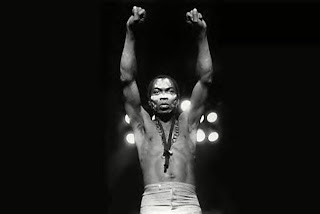
I’ll rip my ears away from between these speakers very briefly to reflect on someone very influential to Nigeria, to Africa and the world at large. Fela Anikulapo-Kuti born October 15, 1938 lived, in my opinion, a fulfilled life. He went through much of his life voicing the deep resentments of a people against their government defiantly on stage; using music as a weapon and not giving a heck about the consequences, especially in the face of the ruthless military regimes that prevailed at the time.


His music echoed the feelings of millions; from the direct challenges voiced in Army Arrangement and Beast of No Nation to the heavy drums and blaring horns that accompanied chants of Eko Ile and the soothing mellow tones that wrap around you in Water No Get Enemy; Fela’s music still remains a constant wake up call to millions who remember the ills of the past and continues to inspire upcoming generations with a steady reminder of what they must aspire to.

Fela died 11 years ago today; leaving a deep void in the hearts of Afrobeat lovers the world over. One of my greatest regrets is still never having a chance to watch him perform live. In his own words “Music is the weapon of the future” so if you don’t mind terribly, I’ll just get back to one full day of strictly Afrobeat music. Easy…

Monday, June 2, 2008

The African Assignment

Across the globe, momentum gathers. Exceptional individuals, groups and organizations persistently work towards a new Africa. A new crop of talented minds and young professionals are engaged in restoring the African image. The question remains, will you be one of those who look back with regret at your reluctance to be a real part of the restoration or will you look back with satisfaction on time spent in service to the continent?

Do you dream of a new Africa? If you do, what do you see and if you don’t, why not? Given the chance to paint a future for Africa, what picture would you come up with? How do we move from our present state to one we and others, without question, want to be part of. I see an Africa which through its seemingly unending period of trial emerges to take its position as a major contributor to modern civilization. One that holds its own as a relevant and respected voice in the global community, not merely as listeners to the wishes or demands of others.

We move into an age of heightened social awareness and it becomes increasingly clear that the welfare of humanity as a whole is inextricably tied to the well-being of Africa. With this also comes the realization that we must each take upon ourselves the task of redefining the continent. If we don’t, someone else will; and then once again, our history will be written for us.

Our intelligence as students and young professionals in various disciplines across the world must be channeled towards redefining its future. Our individual dreams must be blended into one collective vision. It will be wrong to believe we cannot heal the Motherland; to believe that the problems are too much for us to face. No one can do everything, but everyone can do something. This is our call to duty, this is The African Assignment.

Wednesday, May 7, 2008

Patrick Awuah in an effort to understand the failings of leadership in Africa traces the problem to prevailing educational systems and describes how a new approach must be adopted for the more effective results that will become necessary for the future. He specifically mentions his perception on how students from universities in Ghana, graduate with a sense of entitlement rather than responsibility. An occurrence which I believe holds true for a larger part of the continent.


For there to be real development, methods of instruction must emphasize critical and creative thinking. The continent is in dire need of individuals who possess intellectual capability, proficiency and moral competence. In essence, educational systems must be driven more towards producing individuals who are highly proficient in their respective fields and eager to explore innovative avenues for solving real world problems in the most ethical manner.

A system still grappling with traditional mediums cannot compete in the global arena. It should expand to include new mediums and principles that promote not only the mathematical and scientific genius that drives technological advancement but also the creative innovations that stretch limitations and break boundaries. In this way, the sciences promote the arts and the arts drive the sciences; a uniquely symbiotic process that ensures a wider reach and fosters a learning environment within which knowledge, ideas and resources can be applied to problem solving.

As developed nations move towards developing newer educational paradigms, the African continent will also need to embark on a similar shift which allows younger generations to develop a state of mind that keeps us keenly aware of the changes, both apparent and subtle, happening around us constantly. A state of constant curiosity which precedes the thought and practical process necessary for dealing with the challenges of the future.

Sunday, March 2, 2008

Noting the Nuances, Part 3.

Karl Fisch and Scott McLeod, in their updated version of the highly acclaimed video “Shift Happens” deliver a compelling presentation; outlining certain changes happening around the world that shape the way we live and will continue to do so for quite some time. In many ways, the presentation is a call to the younger generation as well as to educational institutions urging them to modify instructional models to prepare for the challenges of the future. As world economies inch steadily towards globalization, Africa’s position, or lack thereof, in the light of circumstances described in the presentation becomes even more uncertain. If we still struggle with the problems of poverty, disease, and war; how can we hope to thrive in a global arena?

In his book The World is Flat, Thomas Friedman outlines some basic necessities that nations must possess in order to have a comparative advantage with others. He mentions Governance, Infrastructure and Education and insightfully notes how the movement of capital/investment from developed to developing nations is driven by these factors. “…capital does not just move around the world looking for the cheapest labor….It is looking for the most productive labor at the cheapest price, and that requires you to get those three basics right.” As the problem of governance remains a huge part of the African predicament, many have turned to private initiatives as it seems African leaders lack the will or wherewithal to brings us out of our present state.

Friday, January 18, 2008

Noting the Nuances, Part 2.

We can all relate to the analogy of a neighborhood where we as residents evaluate others in the community based on their cars, jobs, houses and the like. Ultimately what they own produces certain images in our minds and influences our view of what we perceive to be their status levels. Take for example, a certain family across the street which grows steadily into affluence, eventually moving to a new and more than likely better neighborhood; leaving behind the constraints of the past and reaching for a better future with higher living standards.

Such is the case with India and China, and who’s left behind; take a wild guess. Granted a huge proportion of the Indian and Chinese population still live in harshly poor conditions, however the recent growth in these nations cannot be ignored, especially since it directly affects ours. Factor in continued economic growth, improvements in public policy and innovative private initiatives and a ripple effect of growth can already be seen in some parts of these countries. There is a lot to be learnt from these countries because even as they leave African nations behind they provide the drive needed to pull out of our present position. They are a strong example of practices that can be replicated on the continent and have even, as a BBC article reports, begun providing humanitarian aid to some African countries.

A major contributor to the growth of these countries is technology, or more precisely, technology transfer which has facilitated the outsourcing of jobs from developed nations like the United States to offshore locations. An Information Week article by Paul McDougall outlines a study by consulting firm Deloitte which estimates that “offshore tech spending will rise from 6% of the $44 billion the industry spends on IT annually to 30% by 2010.” Thanks to these same technological advances, the distance between two or more people has diminished significantly; creating an atmosphere where they can collaborate effectively on projects regardless of geographical location, where links can be established between individuals on the continent and those in the Diaspora to foster a new kind of development.

These technologies will have both negative and positive consequences, there is therefore a need to anticipate and re-adapt ourselves to the educational and professional needs of the future. It's common knowledge that many who aimed for courses and jobs in the information systems field in the United States have had to rethink and retool themselves to be adaptable to these changes. Changes which continue to reshape world economies and the educational needs requisite for success in the future. Changes which require us to think more than a few steps ahead in order to make ourselves flexible and thus make our abilities indispensable. Changes which demand that we unleash our imagination to the possibilities that these new tools and resources present for innovation.